Short Description
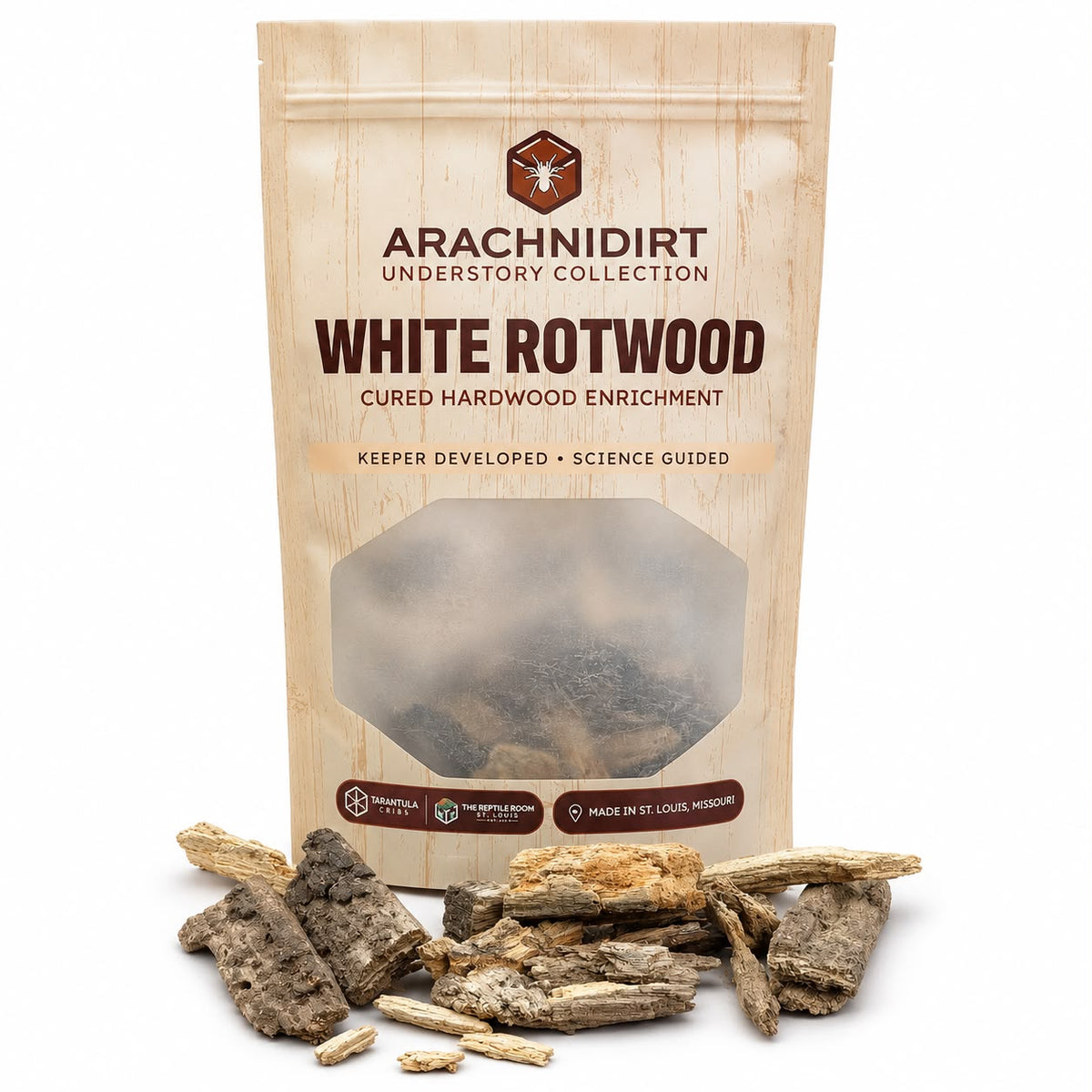
Fungus-softened hardwood from private Ozark forest land. It took nature years to make it, and your cleanup crew can eat it now.
Description
Hand-collected from fallen hardwood on the same private forest land in the Ozark foothills that our leaf litter comes from. This isn’t wood that’s just old. It has spent years on the forest floor while white-rot fungi slowly broke down its lignin, the tough compound that makes wood hard. What’s left is pale, soft and fibrous, and it breaks apart in your hands.
Why white rot?
Most animals can’t digest sound wood. White-rot fungi do the hard part, leaving wood that’s softened and full of fungal growth. For detritivores, that makes it a food source, not just decoration. You can’t speed it up. It takes years of slow fungal work on the forest floor.
What it does in your enclosure
-
Food: It’s a staple for isopods and millipedes, and essential for many beetle larvae, including stag and rhinoceros beetles.
-
Breeding support: Many species chew into it, burrow and raise young inside softened wood.
-
Moisture reservoir: It holds humidity and creates damp microclimates within the enclosure.
-
Natural look: It looks like real forest-floor deadwood because that’s what it is.
Great for
Isopods · Millipedes · Beetle larvae · Springtails · Bioactive vivariums · Roaches
How to use
Bury pieces partly in the substrate, or crumble them in and mix through. Keep the wood moist. You’ll see animals gather on it and work into it over time. Replace it as it gets eaten.
Details
- Wood type: mixed native hardwoods / oak
- Origin: Fallen deadwood, private forested land, Ozark foothills, Missouri
- Size/volume: 0.66 Gal
- Processing: Hand-sorted and heat-treated to eliminate mites and pests, then fully dried.
This is a natural, hand-harvested product, so size, shape, color and how far the wood has decayed will vary from piece to piece.